Thursday, 27 September 2012 Written by Ivan Radford
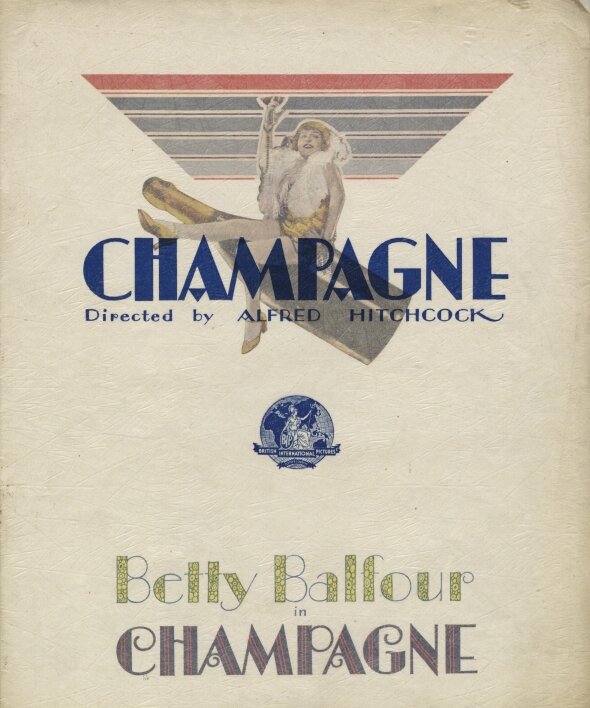
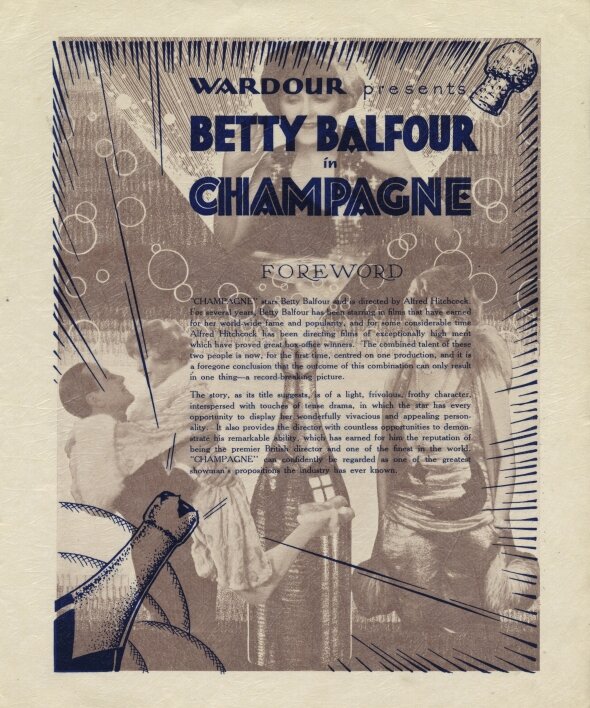
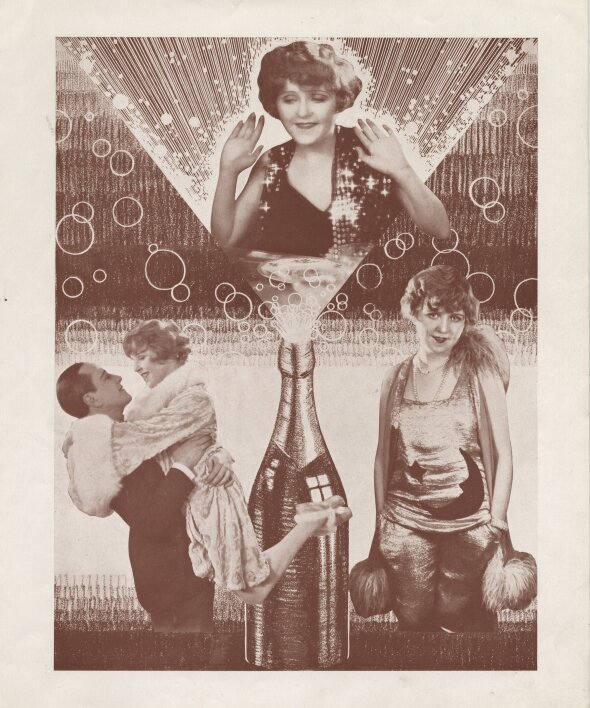
These 1928 press notes for Hitchcock's Champagne are lovely.
Compare that to the production notes given to the press for Looper:
It's not the same.
See more of the gorgeous papery loveliness over at the BFI. And then tune into The Space tonight at 7.30pm to watch a live stream of Champagne's restoration premiere. (Modern technology is awesome.)
Saturday, 22 September 2012 Written by Ivan Radford

Pick up your phone and Dial N for Nom, because it's National Cupcake Week in the UK (until tomorrow) and it coincides brilliantly with the BFI's Genius of Hitchcock season. And so we continue our series of movie-inspired cupcakes with my most ambitious idea yet: Alfred Hitchcock cupcakes. Hitchcakes.
From Vertigo to The Lodger, I crammed as many Hitchcock references on top of tiny cakes as is humanly possible. Read on for the usual pictures, recipes and instructions to make your own Hitchcakes.
Read more...
Wednesday, 05 September 2012 Written by Ivan Radford

Love! Debate! Dare! Laugh! Thrill! Cult! Journey! Sonic! Family! That’s the sound of an all-new London Film Festival. Replacing Sandra Hebron, director Clare Stewart announced a festival programme with a new themed approach instead of the old geographical strands. And judging by the LFF 2012 line-up, she’s succeeded in giving it a shot up the arm.
Oh yes, the LFF promises to give audiences romance, comedy, discussion and excitement. And what better way to combine them all into one film... than a documentary about the A5.
Read more...
Friday, 20 July 2012 Written by Ivan Radford
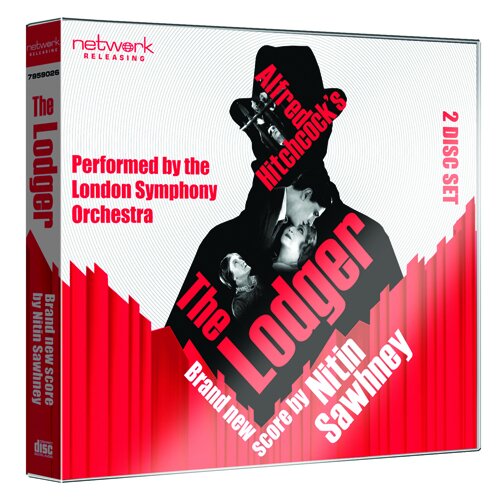 Anyone who’s seen North by Northwest is aware that Alfred Hitchcock knew when to keep schtum. Some of the director’s most iconic scenes unfolded without music or dialogue. But a score can add so many things to an image; it’s no coincidence that Hitch produced his best work with Bernard Herrmann. Anyone who’s seen North by Northwest is aware that Alfred Hitchcock knew when to keep schtum. Some of the director’s most iconic scenes unfolded without music or dialogue. But a score can add so many things to an image; it’s no coincidence that Hitch produced his best work with Bernard Herrmann.
What happens, then, to Hitch’s early silents? Well, thanks to the BFI, they’re all getting restored with spiffing new soundtracks from the likes of Neil Brand and Soweto Kinch. And The Lodger: A Story of the London Fog possibly has the best of the lot.
DJ, composer, musician, producer and general all-round musical genius Nitin Sawhney is behind the score for this 1929 thriller – and he’s come up with a sound that blends classic Hitch with modern tricks. (Head this way to read my interview with Nitin Sawhney for Little White Lies.)
The opening numbers are full of Herrmann, from the inquisitive oboe and oom-pah brass to the driving arpeggios in the lower sections of the orchestra. But halfway through the introduction, a swathe of strings sweeps in, carrying the momentum forward with an almost Indian vibe – a splash of Sawhney’s personality to spice up the old-school style.
Read more...
Friday, 13 July 2012 Written by Ivan Radford
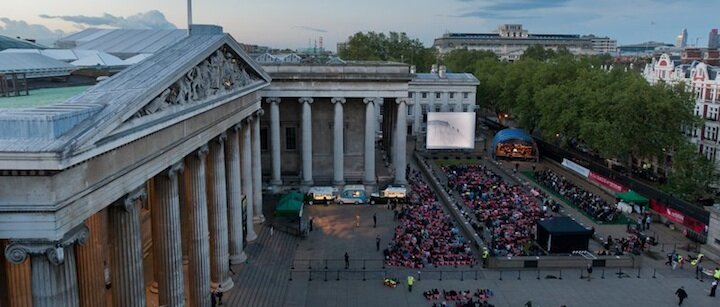
Photo: Benedict Johnson (via BFI)
The other week I sat in a cold field on some grass staring at bright lights and live music into the wee small hours. No, I wasn't at T in the Park. I was watching Alfred Hitchcock's Blackmail as part of the BFI's Genius of Hitchcock season, newly restored and given a spanking new score by Neil Brand. It was a fantastic chance to watch some early, silent-era Hitchcock, something that taught me a few new things about a director I thought I knew very well.
Here are seven things I learned from watching Blackmail at the British Museum:
Read more...
Friday, 23 March 2012 Written by Ivan Radford
If there's ever been proof of Charles Dickens' long-lasting influence upon film, the BFI's series of pre-1914 short films is it. Dating all the way back to 1901, cinema has been forever besotted by Dickens' work, from the author's grand sweeps across society to his small indoor scenes of poverty-stricken people keeping warm by expensive fires.
Oh yes, there've been a lot of Dickens movies over the years. It's a sign in itself that tonight's set of screenings is the second anthology of silent shorts put together by the BFI. Add that to the fact that A Christmas Carol appears frequently in both line-ups and you know what you get? Sick and tired of watching A flipping Christmas Carol.
Fortunately, you also get fascinated by a compilation of old creations that you wouldn't see at any other point in your life. Chief of which is the newly discovered 1901 movie, The Death of Poor Joe, the oldest surviving Dickens film, which will be screened as part of tonight's event. (You can listen to Michael Eaton's discussion of the film's significance at the premiere here.)
Read more...
Sunday, 11 March 2012 Written by Ivan Radford
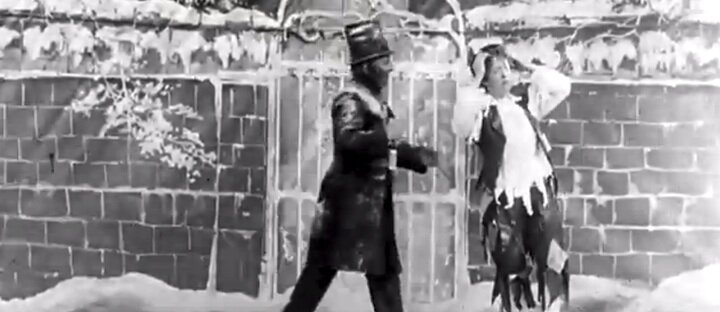
On Friday night at the BFI, I was at the first public screening of a newly discovered silent film: The Death of Poor Joe, made in 1901 and now thought to be the earliest surviving movie based on a Charles Dickens novel. The film was shown as part of the BFI's fascinating series of pre-1914 short Dickens films. The programme is repeated on Friday 23rd March (more on that nearer the time), but one highlight of Friday's premiere of The Death of Poor Joe was an introduction by Michael Eaton, Dickens expert and co-curator of the BFI season dedicated to the author, who discussed the film's discovery and history. Is it really the earliest surviving Dickens movie? Here's what he had to say:
For more on the Dickens on Screen season, the official site is this way. And thanks to the brilliance of the BFI (and the internet), you can read on to watch the full film here:
Read more...
Wednesday, 22 February 2012 Written by Ivan Radford
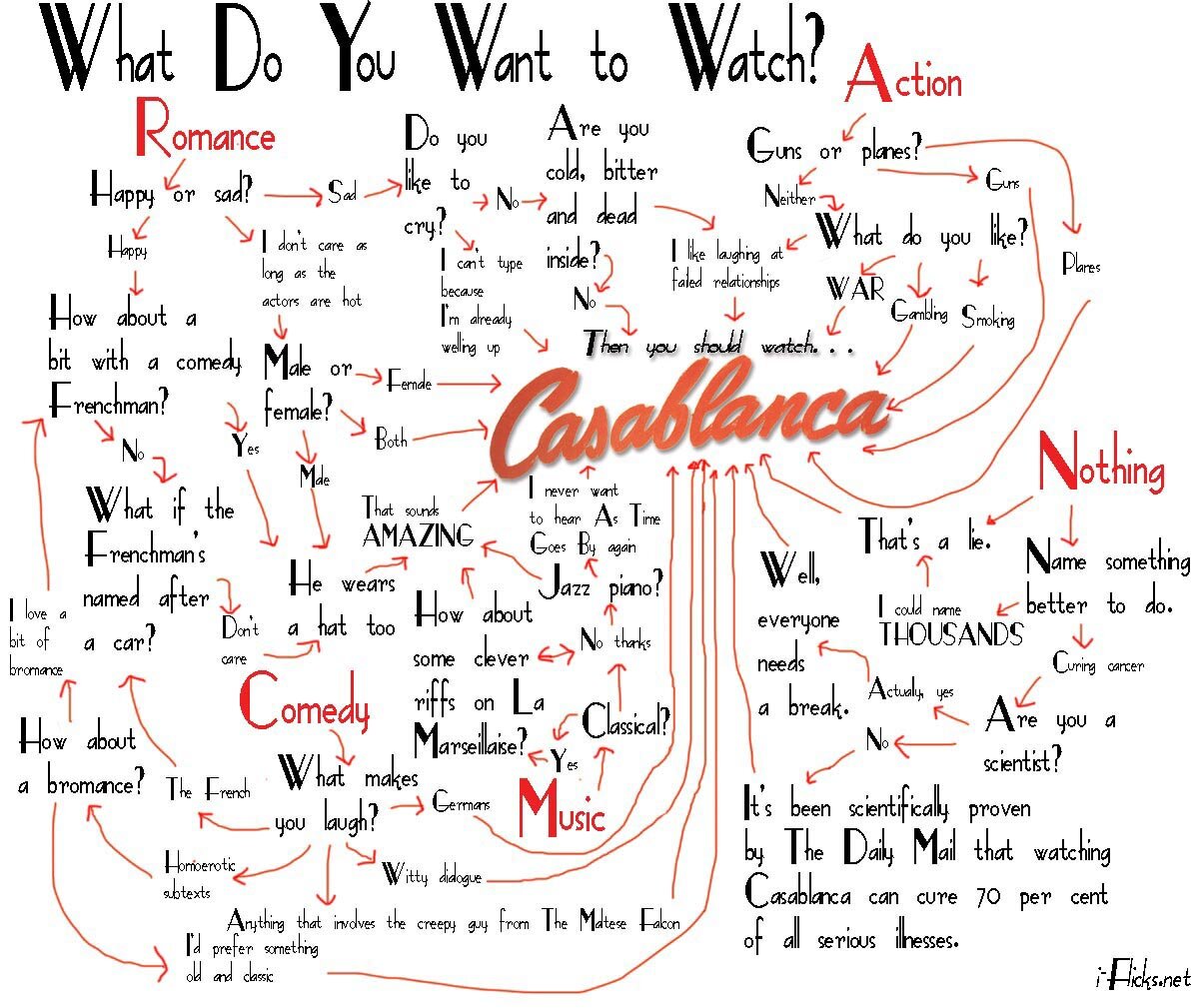
Forget Star Wars Episode I: The Phantom Bumhole, there's another re-release in UK cinemas that is way more important. I speak, of course, of Casablanca, Michael Curtiz's 1942 masterpiece that pretty much defines the phrase "classic movie". The wonderful Park Circus are distributing it in selected venues this month to celebrate its 70th anniversary - you can see the original Casablanca press notes send out by Warner Bros on the Park Circus blog here.
But in case you're not sure what you want to watch at the cinema this week, here's proof that no matter what mood you're in, you should go and see Casablanca:
Casablanca, one of the greatest movies ever made*, is on at the BFI until Thursday. Go see it. Or I'll make another flow-chart to prove how foolish you are.
* (although it's no Season of the Witch)
Wednesday, 08 February 2012 Written by Ivan Radford
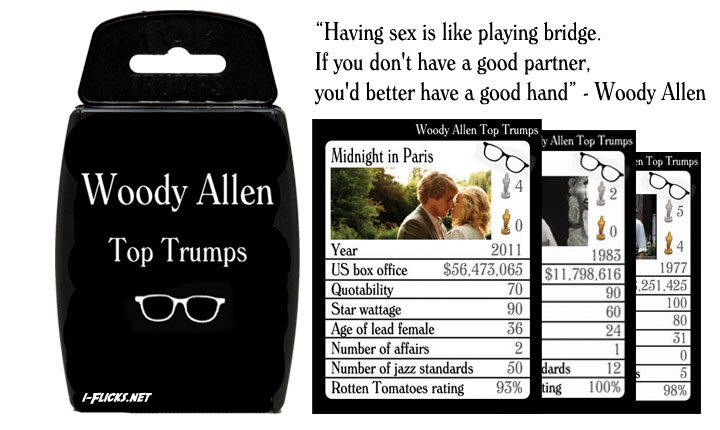
Midnight in Paris came out on DVD this week (here's a review), almost perfectly timed to coincide with the end of the BFI Woody Allen Season (which ends today). After attempting to blog along with the retrospective of one of my favourite directors, I soon realised I didn't have the time. So instead, as a spectacular finale to the whole series, I spent the last couple of weeks gradually condensing all the highs and lows of Woody Allen's film-making career into one easy game of compare-the-statistics fun.
Spend all your time arguing about which Woody Allen film is the best? Settle the debate once and for all with your own Woody Allen Top Trumps deck. That's right. Woody Allen Top Trumps.
You all know the basic set-up (deal out the pack, pick a stat off your top facing card, read it aloud and whoever has the highest/lowest wins the round). Read on to see which categories are best - then download the full deck ready for you to print off here.
Read more...
Tuesday, 24 January 2012 Written by Ivan Radford
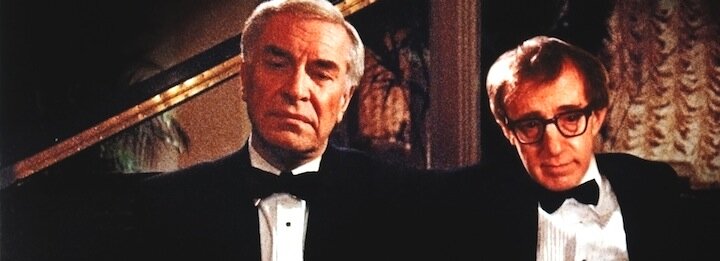
“Let me tell you a story and you tell me, is it material for a comedy or a tragedy?”
The starting point for Melinda and Melinda is the opening for every Woody Allen movie. As a director who finds comedy in the depressing and futile meaningless of life, Allen’s best work features comedy that stems from serious drama. Hannah and Her Sisters. The Purple Rose of Cairo. Husbands and Wives. Manhattan.
That duality is something that Allen openly confronts in binary titles. Crimes and Misdemeanors. Melinda and Melinda. Even Love and Death highlights the contrast between the silliness of farce and the philosophy of Chekhov. It’s when the director steps away from this balance that he starts to falter - see the Bergman-inspired Interiors, or the melodramatic Match Point, which expands one half of Crimes and Misdemeanours into a full feature-length narrative.
And so, as the BFI Woody Allen season continues, here are some thoughts on two of Woody’s most explicitly binary movies.
Read more...
|